Commercial
Construction
Miami-Dade County.
Local Knowledge That Helps Protect Your Project
Miami-Dade is one of South Florida's most dynamic construction markets, but it is also one of its most complex. Local municipal approvals are frequently combined with county reviews involving environmental resources, water and sewer, fire protection, transportation and impact fees.
Establishing the complete approval path at the beginning of the project is essential.
You Don't Need to Know
Everything About Building to Build Here.
That's what we bring to the table.
Miami-Dade's 34 municipalities each operate independently, but county-level reviews from DERM, Miami-Dade Water and Sewer, Fire Rescue and other agencies can apply even within incorporated cities.
High-Velocity Hurricane Zone requirements, sewer capacity certifications, environmental reviews and sea-level considerations add layers of complexity that must be addressed early in the design process.
We bring the Miami-Dade experience, construction perspective and local relationships needed to help your team understand the property, navigate the path forward and make decisions with greater confidence.
"We help connect the decisions being made in the boardroom with the realities of the property and the construction site."
General Contracting · Design-Build · Preconstruction · Construction Management
Six Things That Can Affect Your Project Before Ground Is Broken
Miami-Dade Is Not a Single Permitting Jurisdiction
Miami-Dade County contains 34 incorporated municipalities, in addition to extensive unincorporated areas. A municipality handles zoning and building permitting for properties inside its boundaries, while Miami-Dade County handles those functions in unincorporated areas.
Even when a city issues the primary building permit, separate county approvals may still be required from DERM, Miami-Dade Water and Sewer, Miami-Dade Fire Rescue and other agencies.
Projects Must Be Designed for High-Velocity Hurricane Zone Requirements
Miami-Dade projects are subject to the Florida Building Code's High-Velocity Hurricane Zone provisions. Roofing, windows, exterior doors, shutters, glazing and other building-envelope products may need qualifying Miami-Dade Notices of Acceptance.
Confirming approved assemblies during design can help prevent substitutions, redesign and procurement delays later in construction.
Sewer Capacity Can Affect Both New Construction and Renovations
A Sewer Capacity Certification may be required whenever construction or a change of use increases wastewater discharge — including adding seats to a restaurant or adding another doctor to a medical practice.
Capacity may not always be available, and an awarded allocation generally must be submitted with building plans within the County's required timeframe.
Environmental Review May Be Separate From the Building Permit
Miami-Dade's Division of Environmental Resources Management reviews wetlands, tree removal, cut and fill, stormwater systems, dewatering, coastal work and mangrove impacts. Some of these county approvals apply even within incorporated municipalities.
Environmental screening should occur before the site plan and construction documents are completed.
Flooding and Sea-Level Conditions Require Parcel-Level Evaluation
Ground elevation, storm surge, drainage, flood zones and longer-term sea-level conditions can vary substantially throughout Miami-Dade. The County's flooding vulnerability tools allow property-level review of elevation, storm surge and multiple sea-level-rise scenarios.
These conditions can influence finished-floor elevations, stormwater design, site access, insurance and long-term property operations.
Impact Fees, Platting and Traffic Capacity Should Be Addressed Early
Miami-Dade impact fees must generally be paid before a building permit is issued, and certain fees — including road and school impact fees — apply countywide. New development may also require platting and traffic-concurrency review.
For applicable projects, traffic capacity can be reserved through the tentative-plat process, but that reservation may be lost if the tentative plat expires.
Local Permitting
and Approvals
Depending on the property, a project may involve a municipal building department, Miami-Dade County agencies, DERM, Miami-Dade Water and Sewer, fire officials, planning and zoning, utility providers and other local authorities.
We help the project team identify where the process begins, coordinate the required construction information and navigate the questions that arise as plans move through review.
Before you set an opening date, make sure the project timeline considers design, permitting, procurement, inspections and utility coordination — not only construction.
What We Look For
- The property's permitting jurisdiction (city or unincorporated county)
- The proposed use and occupancy
- Planning or zoning considerations
- Required DERM and environmental reviews
- Sewer capacity certification requirements
- Miami-Dade Fire Rescue coordination
- Impact fee obligations
- Traffic concurrency and platting requirements
- Flood zone and sea-level conditions
- Inspection and closeout requirements
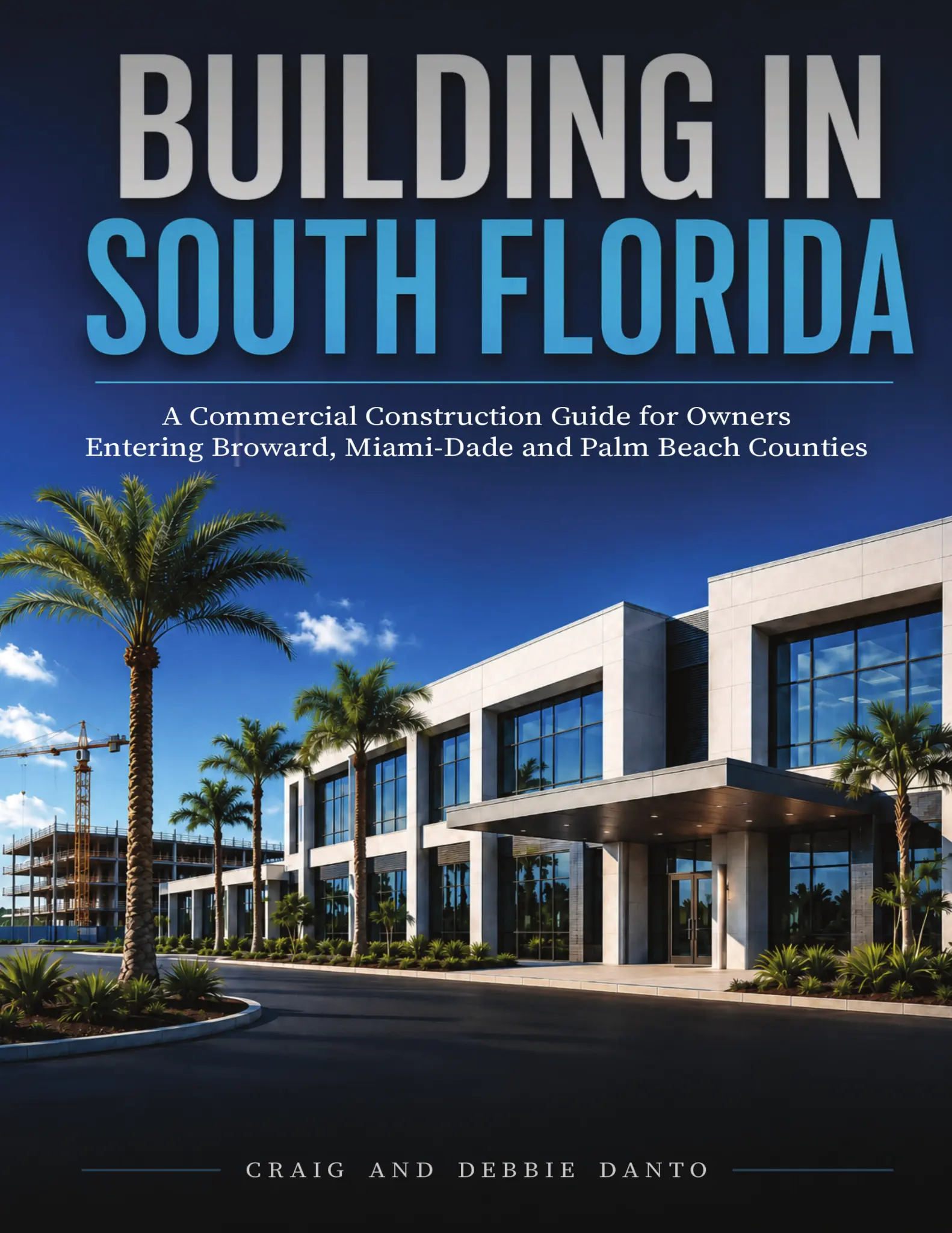
A practical guide for owners entering the market
Plan your move into Miami-Dade County.
Notify me when Danto Builders' commercial construction guide is available. It gives your team a clearer starting point for local approvals, site conditions, budgets, and the decisions that shape the schedule.
High-Velocity Hurricane
Zone Construction
Miami-Dade projects are subject to the Florida Building Code's High-Velocity Hurricane Zone provisions. Roofing, windows, exterior doors, shutters, glazing and other building-envelope products may need qualifying Miami-Dade Notices of Acceptance or other approved product documentation.
We work to bring these considerations into the conversation early so that the design, budget and procurement plan reflect the realities of building in Miami-Dade County.
Confirming approved assemblies during design can help prevent substitutions, redesign and procurement delays later in construction.
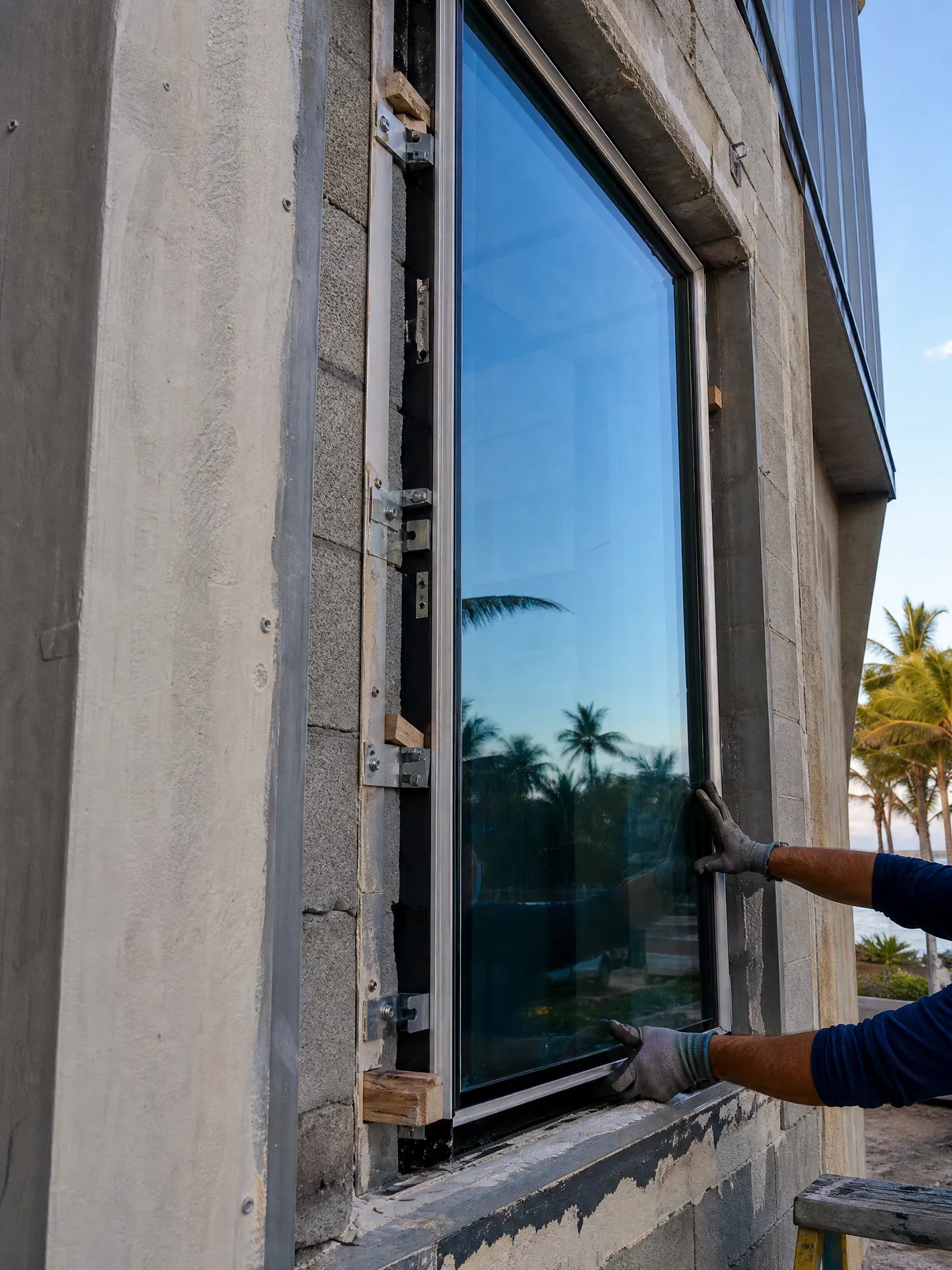
HVHZ · Miami-Dade NOA · Wind Compliance
Flooding, Sea Level
and Site Conditions
Ground elevation, storm surge, drainage, flood zones and longer-term sea-level conditions can vary substantially throughout Miami-Dade. The County's flooding vulnerability tools allow property-level review of elevation, storm surge, flood zones and multiple sea-level-rise scenarios.
These conditions can influence finished-floor elevations, stormwater design, site access, insurance and long-term property operations.
Before you purchase, remember that the visible condition of a property does not always reveal its drainage, groundwater, elevation or infrastructure limitations.
What We Look For
- Ground elevation and flood zone designation
- Storm surge exposure
- Stormwater drainage and outfall
- Sea-level-rise scenario evaluation
- Finished-floor elevation requirements
- Below-grade conditions
- Utility placement
- Neighboring properties and surrounding infrastructure
- How the proposed improvements may change site performance
Miami-Dade County,
City by City
Miami-Dade County's 34 incorporated municipalities each operate under their own local policies and permitting procedures. We have experience navigating the requirements across the county.
Interactive Miami-Dade County Map
Interactive municipality map — coming soon. Contact us to discuss your specific location.
Talk With Us Before
You Select a Property
One of the most valuable times to involve a general contractor is before a lease is signed or a property is purchased. We can help your team understand what a property may require before major commitments are made.
An early conversation costs nothing and can prevent costly surprises later.
What We Can Help You Understand
- The likely construction scope
- Existing building and site conditions
- Potential site-related concerns
- Whether the proposed use may require broader improvements
- Preliminary budget considerations
- Architectural and engineering needs
- The likely approval and permitting path
- DERM and environmental review requirements
- Sewer capacity and utility coordination
- Long-lead materials and equipment
- Questions that should be answered before moving forward
Let's Meet Before
You Make a Commitment.
If you're evaluating a site, planning an expansion or thinking about opening a location in Miami-Dade County, we'd like to hear about it. An early conversation with our team can help you understand what the project may involve before the major decisions are made.